

 Kunststof Forte BV
 Why are more and more people opting for HPL/Trespa panels?
More and more individuals and businesses are opting for HPL/Trespa panels because this material lasts for years without requiring much maintenance, whilst retaining a sleek and well-maintained appearance. HPL/Trespa panels are UV-resistant, colourfast, impact-resistant, easy to work with and available made to measure, and are suitable for both new builds and renovation projects. Whether it’s a façade, a kitchen worktop or a garden project: HPL and Trespa offer a combination of strength, weather resistance and appearance that few other materials can match. In this article, you’ll find out exactly what HPL and Trespa are, what they’re used for, and what to look out for when purchasing, working with, installing and maintaining them.
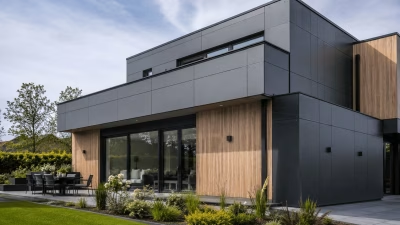
What is the difference between HPL and Trespa?
Trespa is a brand name for a specific, high-quality type of HPL (High-Pressure Laminate). HPL is the collective term for panels made up of layers of kraft paper and decorative paper, bonded together under high pressure and temperature using a synthetic resin. Trespa Meteon is the best-known HPL range for outdoor use and is renowned for its colour fastness and resistance to the elements. In addition to Trespa, we also supply high-quality HPL Exterior panels from UniKern®, which offer the same properties at an attractive price. Would you like to know exactly how these materials are constructed? Then read more about what exactly HPL entails and about the properties of Trespa.
What do you use HPL/Trespa panels for?
HPL/Trespa panels are mainly used for cladding, window frame panels, balcony partitions and interior applications such as kitchens and bathrooms. The panels are scratch- and moisture-resistant, do not fade easily in the sun and are easy to clean. For façades, complete installation systems are often chosen, such as the Trespa Meteon façade systems, which provide a sleek, ventilated finish. HPL panels are also popular in interior design and stand construction due to their strength and the wide range of colours and textures available.
Why are HPL exterior panels durable?
HPL exterior panels are durable because they are resistant to UV radiation, moisture, frost and temperature fluctuations. As a result, they retain their appearance for many years with minimal maintenance. Whereas painted wood needs to be repainted or treated over time, an HPL or Trespa panel often remains in good condition for decades without further treatment. This makes it an attractive choice for projects where a long service life is important.
What is the warranty on HPL Exterior panels?
HPL Exterior panels come with a 10-year manufacturer’s warranty. UniKern® HPL Exterior panels are manufactured from high-quality raw materials and feature a UV-resistant finish. As a result, a 10-year manufacturer’s warranty applies to colour fastness, mechanical properties and protection against delamination, in accordance with the manufacturer’s warranty terms and conditions.
How does HPL behave when exposed to temperature and moisture?
Like wood, HPL is affected by temperature and humidity, causing the sheet to expand and contract slightly. It is therefore essential to allow sufficient expansion space during installation, so that the sheets can move freely without becoming stressed or warped. Taking this into account during installation will prevent cracks from forming or fixings coming loose in the long term.
How do you maintain HPL/Trespa panels?
To maintain HPL/Trespa panels, clean them annually using water, a mild soapy solution and a soft cloth or brush. Do not use abrasive cleaners or solvents, as these can damage the top layer. Car shampoo may be used and also helps to prevent the growth of algae. For stubborn stains or graffiti, there are specific cleaning products available that will not damage the panels. You can find a detailed explanation of the correct approach in our article on Cleaning Trespa panels.
How do you work with HPL sheets?
HPL sheets are ideal for sawing, drilling and routing, provided you use carbide-tipped tools to achieve the best results. This ensures a clean edge and prevents the top layer from flaking off. You can find useful tips on this in our Tips for cutting HPL.
How do you store HPL sheets?
Store HPL panels flat and fully supported, in a dry room and protected from moisture. When moving the panels, always lift them rather than dragging them, to prevent damage to the edges and surface. Proper storage prevents unnecessary complaints before the sheets are installed.
What should you bear in mind when installing HPL cladding panels?
When installing HPL cladding panels, ensure there is sufficient ventilation space, that the joint width is correct, and that the correct fixing materials are used. Key points to bear in mind are:
- a ventilation gap of at least 20 mm
- vertical ventilation
- a joint of at least 8 mm
- 8 mm drill holes
- Stainless steel Torx screws
- EPDM tyre
- a correct rail spacing
Who these processing instructions ensures that the façade is well ventilated, remains dry and does not place any unnecessary strain on the panels.
Where can you order made-to-measure HPL/Trespa sheets?
You can order made-to-measure HPL/Trespa panels from us, choosing the dimensions, colour and finish yourself. This is particularly useful if you want to add to an existing structure or are working on a project with specific dimensions, such as a balcony railing or a façade renovation. Explore the options for Bespoke HPL and Trespa and, if you wish, request a quote for your project. Do you have any questions about the choice of materials, installation or fitting? Please feel free to contact us for personalised and expert advice.