

 Kunststof Forte BV
 Cutting polycarbonate sheets: what do you need to bear in mind?
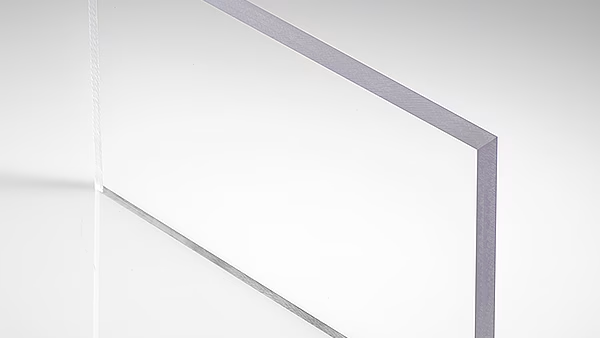
Polycarbonate is a versatile plastic that is widely used in sectors such as construction, machine casings, interior design, glazing and canopies. The material is clear, impact-resistant and easy to work with. However, in practice, questions often arise regarding its processing. Particularly regarding cutting to size. After all, is it better to saw or cut a polycarbonate sheet? In this article, we explain the options available, when to use which technique, and what to look out for when working with polycarbonate sheets.
Sawing or cutting: what’s the difference?
When customising a polycarbonate tube There are broadly two methods: sawing or cutting (also known as scoring). Scoring is particularly suitable for thin sheets up to about 2 mm thick. This involves using a sharp knife to make a groove, after which you snap the sheet along that line. As soon as you’re working with thicker sheets, sawing is almost always the better choice. Polycarbonate is tough and flexible, which makes it difficult to break cleanly. Sawing therefore produces a neater, more reliable finish.
Cutting polycarbonate sheets: here’s how to do it
For sawing polycarbonate sheets You can use standard power tools. It is important to use a sharp, fine-toothed saw blade and the correct settings. Suitable saws include:
- Circular saw: ideal for long, straight cuts
- Jigsaw: suitable for curves or cut-outs
- Crosscut saw: ideal for repetitive sawing tasks or cutting short lengths
Make sure the sheet is securely fixed to a flat surface, such as a sawing table. Leave the protective film in place as much as possible whilst sawing to prevent scratches. Saw at a moderate speed and do not apply too much pressure to prevent the material from melting.
When can you cut polycarbonate?
Cutting is only recommended for sheets up to approximately 2 mm thick. Use a sharp plastic knife or craft knife, and run it along a ruler several times to create a deep groove. You can then carefully snap the sheet along that line.
The benefits of cutting include:
- You don’t need any power tools
- No dust or sawdust is produced
- It’s quick for simple applications
However, cutting is less suitable for precision work, longer cuts or professional use. In such cases, sawing is almost always the better option.
Tips for a neat finish
Do you want to prevent damage to the material and achieve a neat finish? If so, please bear the following in mind:
- Allow the disc to reach room temperature if it has been in a cold environment
- Use sharp saw blades with fine teeth, specifically designed for plastic
- Cut at a steady pace to prevent burning or melting
- Keep the work surface stable and well supported
For curves or cut-outs, a jigsaw with a fine-toothed blade is the best choice. For holes, you can use a metal drill bit at low speed.
Do it yourself or outsource it?
At Kunststof Forte, you’ll find an extensive range of polycarbonate sheets in various finishes: clear, opal, UV-resistant and more. We also supply polycarbonate tubes for cylindrical applications. You can cut the sheets yourself or have us do it for you. We offer bespoke solutions for businesses and professionals who require products delivered to exact specifications. Please contact us to discuss the options.
Conclusion: which will you choose?
The choice between sawing or cutting polycarbonate sheets depends on the thickness of the sheet and the desired end result. Cutting is only suitable for thin sheets and simple applications. For anything beyond that, sawing is the safest and most professional method. Do you regularly work with plastic sheets, or do you have specific requirements for bespoke work? Please feel free to contact us. We’d be happy to help with advice and bespoke solutions.